The Poor Tax Is Real — And It's Quietly Draining Millions of American Wallets
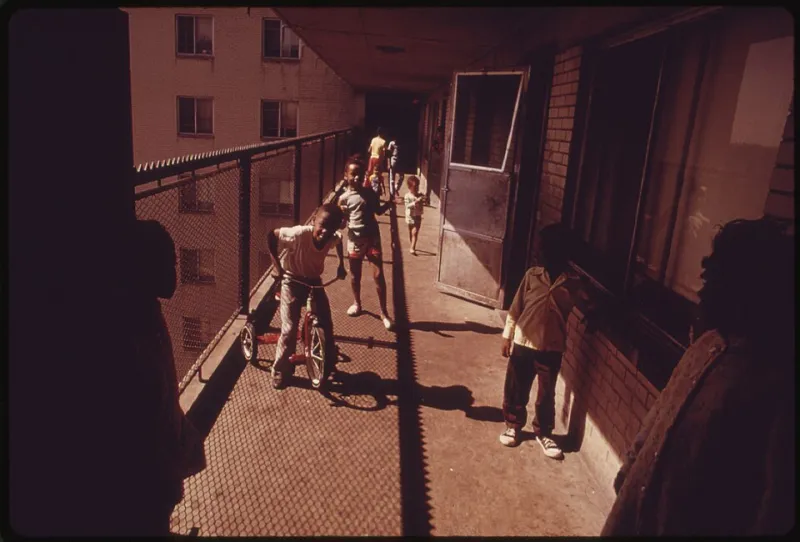
Photo: John H. White, Public domain, via Wikimedia Commons
There's a cruel irony baked into the American financial system: the less money you have, the more you end up paying for almost everything. It's not a conspiracy. It's not always intentional. But it's real, it's measurable, and it costs low-income households thousands of dollars every single year.
Economists and sociologists have a name for it — the "poverty premium" or sometimes the "poor tax." And once you see it, you genuinely can't unsee it.
What the Poor Tax Actually Looks Like
Let's start with something simple: toilet paper.
A 36-pack of Charmin at Costco breaks down to about $0.28 per roll. The same brand sold in a 4-pack at a corner bodega or dollar store? Closer to $0.75 per roll. The person buying the bulk pack is saving nearly 63% per unit — but they needed $25 upfront to do it. If your checking account has $40 in it and rent is due Friday, that Costco run isn't happening.
This dynamic plays out across virtually every spending category:
- Food: Buying a week's worth of chicken breasts at once costs less per pound than buying two at a time. Meal prepping saves money — but requires a working freezer, storage containers, and time.
- Medications: Uninsured or underinsured Americans often pay full retail for prescriptions, while employer-sponsored plan holders pay a $10 copay for the same drug.
- Transportation: Owning a reliable car is cheaper long-term than relying on rideshares and buses — but the down payment and insurance costs are barriers.
- Housing: Renting month-to-month (when you can't lock into a lease) almost always costs more per month than a standard 12-month agreement.
The pattern is consistent: access to capital unlocks discounts. No capital means paying full price — or worse, paying a penalty.
The Fee Economy Hits Hardest at the Bottom
Bank overdraft fees are one of the most glaring examples of the poor tax in action. The average overdraft fee at a major U.S. bank is around $35. Overdraft $3 on a Tuesday, and you just paid a 1,167% fee on that transaction.
According to the Consumer Financial Protection Bureau, the people who get hit with overdraft fees most often are those with low account balances — people living paycheck to paycheck who are one small miscalculation away from going negative. Banks collected over $7 billion in overdraft and NSF fees in 2022 alone. That's not a rounding error. That's a business model.
And then there's the check-cashing and payday lending industry. If you don't have a bank account — and roughly 5.9 million American households don't, according to the FDIC — cashing a paycheck costs money. A typical check-cashing fee runs 1–3% of the check's face value. Cash a $1,000 check every two weeks, and you're handing over $500–$1,500 a year just to access your own wages.
Payday loans are even more punishing. The average APR on a two-week payday loan is around 400%. When you're $200 short on a utility bill and the alternative is getting your lights cut off, a payday loan can feel like the only option. But that short-term fix has a long-term price tag.
Why This Isn't Just a Willpower Problem
It's tempting — and frankly, lazy — to chalk all of this up to poor financial decisions. But that framing ignores the structural reality. When your take-home pay barely covers rent and groceries, there's no slack in the system for "smart" buying. You buy what you can afford right now, not what would be cheaper over time.
Researchers Sendhil Mullainathan and Eldar Shafir explored this in their book Scarcity, finding that financial stress literally reduces cognitive bandwidth — making it harder to plan ahead and easier to make short-term decisions that compound into bigger problems. The poor tax isn't just a money problem. It's a design problem.
Practical Ways to Chip Away at the Poor Tax
Okay — so the system is stacked. What can you actually do about it?
1. Switch to a No-Fee Bank or Credit Union
This one is low-hanging fruit. Online banks like Chime, Ally, and SoFi offer free checking accounts with no overdraft fees (or very generous overdraft protection). Many credit unions also offer free accounts with fewer fees than traditional banks. If you're still banking somewhere that charges $35 for going $2 negative, moving your account is one of the highest-ROI moves you can make this week.
2. Use GoodRx and Prescription Discount Programs
If you're paying full price for medications, stop. GoodRx is free and can cut prescription costs by 80% or more at most major pharmacies. Many drug manufacturers also offer patient assistance programs — it takes a phone call, but it's worth it.
3. Pool Bulk Purchases With Trusted People
Can't afford a Costco run alone? Split a membership and coordinate bulk buys with a family member, neighbor, or close friend. Split a 36-pack of paper towels four ways and everyone wins. This is old-school community economics, and it works.
4. Prioritize Building a Small Cash Buffer
Even $200–$300 in a dedicated savings account can break the overdraft cycle. It sounds impossible when you're stretched thin, but even $10 or $15 per paycheck adds up. Some banks let you automate micro-transfers so you don't have to think about it.
5. Explore SNAP, LIHEAP, and Other Assistance Programs
Millions of Americans who qualify for federal assistance programs don't use them. SNAP (food stamps), the Low Income Home Energy Assistance Program, and local utility assistance programs exist specifically to offset these costs. Using them isn't a failure — it's using a resource you're entitled to.
6. Watch for Predatory Lending Alternatives
If you need emergency cash, exhaust every other option before a payday loan. Credit union payday alternative loans (PALs) cap interest at 28%. Some employers offer earned wage access — letting you pull already-earned wages before payday. Apps like EarnIn and Dave offer small advances with minimal or no fees.
The Bottom Line
The poor tax is real, it's expensive, and it's not your fault. But knowing it exists — and knowing where it shows up — gives you a fighting chance to minimize its impact. Every fee you avoid, every bulk deal you manage to access, every predatory loan you sidestep is money that stays in your pocket.
The system isn't fair. But you can still play it smarter.