Your Credit Score Is a Hidden Tax — And It's Costing You More Than You Think
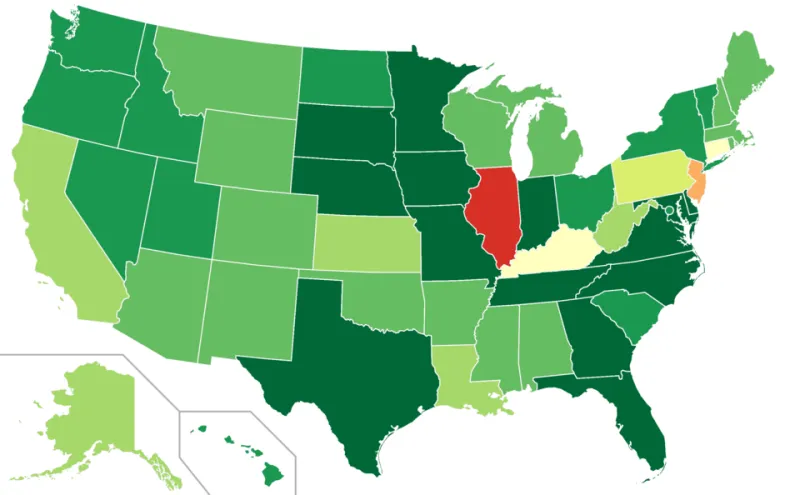
Photo: Szmenderowiecki, CC BY-SA 4.0, via Wikimedia Commons
Most people treat their credit score like a grade on a test they already forgot about. It goes up, it goes down, and unless you're about to apply for a car loan or a mortgage, you probably don't think about it much. But here's the uncomfortable truth: your credit score is working on you every single day — even when you're not borrowing a dime.
Think of it less like a financial report card and more like an invisible tax. A tax that gets quietly added to your insurance bills, your rent, your job applications, and sometimes even your utilities. The people who pay the most of it often don't even know it exists.
The Interest Rate Hit Everyone Knows About (But Underestimates)
Let's start with the obvious one. Yes, a lower credit score means higher interest rates on loans and credit cards. Most people understand this in theory. What they don't fully grasp is the dollar amount.
Take a $30,000 auto loan over 60 months. A borrower with excellent credit (760+) might lock in a rate around 5%. Someone with fair credit (580–619) could be looking at 15% or higher. That difference? Close to $8,000 in extra interest payments over the life of the loan — for the exact same car.
On a 30-year mortgage, the gap gets even uglier. The difference between a 620 credit score and a 760 can translate to an interest rate spread of 1.5% or more. On a $300,000 home loan, that's over $90,000 in additional interest. Nearly six figures — gone — because of three digits.
The Insurance Bill Nobody Talks About
Here's where it gets sneaky. In most U.S. states, insurance companies are legally allowed to use your credit score — or a version of it called a "credit-based insurance score" — to set your premiums. That includes auto insurance and homeowners insurance.
Studies have shown that drivers with poor credit can pay 50% to 100% more for car insurance than drivers with excellent credit, even with the exact same driving record. In some states, the gap is even wider. The logic insurers use is that credit behavior correlates with claim likelihood — a justification that's been heavily debated but remains legal in most of the country.
If you're paying $150 a month for car insurance when you could be paying $90, that's $720 a year. Over a decade, that's $7,200. Gone. Not because you caused accidents. Because of your credit score.
Renting? Your Score Controls Your Options
If you're renting an apartment, your credit score is essentially your audition. Most landlords in competitive markets pull credit reports as a standard part of the application process. A score below 620 can get you flat-out rejected from properties you could actually afford.
So what happens? You end up in a less desirable area, or you pay a larger security deposit, or you need a co-signer, or you rent from a private landlord who charges above-market rates because they're one of the few willing to work with you. Every one of those outcomes costs money — either upfront or over time.
And here's the part that really stings: living in a less affordable area because your credit locked you out of better options can affect your commute costs, your access to grocery stores, your kids' schools, and your overall quality of life. Credit score consequences aren't just financial — they ripple.
Employers Are Checking Too
This one surprises a lot of people. A growing number of employers — particularly in finance, government, and management roles — run credit checks as part of the hiring process. About 25% of employers do this according to various surveys, and the number is higher in certain industries.
The argument is that financial responsibility signals professional reliability. Whether or not you agree with that logic, the reality is that a troubled credit report can cost you a job offer. And a job offer in the wrong direction can cost you tens of thousands in annual salary.
Thirteen states and several cities have passed laws limiting employer credit checks, so your protections depend on where you live. But if you're in a state without those protections, your credit score is quite literally part of your resume.
Utilities, Cell Phones, and the Little Stuff That Adds Up
When you sign up for electricity, gas, or water service, many utility providers run a credit check. A low score can mean you're required to pay a security deposit upfront — sometimes equal to one or two months of service. Same goes for cell phone contracts. Carriers like to see solid credit before handing you a financed device or a postpaid plan.
These aren't massive expenses individually, but they compound. Every time you're asked to put money down because of your credit, that's cash sitting idle instead of working for you.
So What's the Real Lifetime Cost?
Add it all up — the extra mortgage interest, the inflated auto loan, the higher insurance premiums, the missed job opportunities, the security deposits — and you're looking at a realistic lifetime cost well into the six figures for someone carrying a consistently poor credit score. Some estimates put it above $200,000 over a lifetime. That's not a typo.
The Good News: This Is One of the Most Fixable Financial Problems Out There
Unlike your income ceiling or the cost of living in your city, your credit score is something you can actually control. And improvement doesn't have to take years.
Step one: Know exactly where you stand. Pull your free credit reports at AnnualCreditReport.com and check all three bureaus — Equifax, Experian, and TransUnion. Look for errors. They're more common than you'd think, and disputing them is free.
Step two: Pay down revolving balances. Your credit utilization — how much of your available credit you're using — accounts for about 30% of your FICO score. Getting that number below 30% (and ideally below 10%) can move your score meaningfully in just one or two billing cycles.
Step three: Don't close old accounts. Length of credit history matters. That old card you never use? Keep it open. Just make sure it doesn't have an annual fee eating at you.
Step four: Set up autopay for minimums. Payment history is the single biggest factor in your score — 35% of the total. One missed payment can drop your score by 60 to 110 points. Autopay removes the human error factor entirely.
Step five: Be strategic about new credit. Every hard inquiry can ding your score slightly. Apply for new credit only when it genuinely makes sense, and do your rate shopping for loans within a short window so multiple inquiries count as one.
The Bottom Line
Your credit score isn't just a lending tool — it's a lever that affects nearly every financial transaction in your life. Treating it as an afterthought is one of the most expensive habits an everyday American can have. The good news is that even modest improvements — going from 580 to 660, or 660 to 720 — can start unlocking meaningfully better rates and terms almost immediately.
Fixing your credit isn't glamorous. It doesn't make for exciting dinner conversation. But it might be the highest-return financial move you can make this year.